Wholesale enzyme supply for composters, organic fertilizer makers and distributors processing wood residue, green waste and mixed organics. Quote-only bulk supply, trial quantities to regular orders.
Request pricingEnzymefield supplies enzyme blends in bulk to businesses that process organic residue at scale: commercial composters, organic fertilizer and soil-amendment manufacturers, wood and forestry residue processors, and the distributors who resell process inputs to them. Our blends are process aids for plant fiber, wood-derived material, residual proteins, fats, paper-based organics and food residuals.
If your site is fighting inconsistent heat, slow pockets, odor pressure, or uneven finished compost, the issue is often not one material. It is the way several feedstocks behave together under changing moisture, carbon balance, particle size, and turning schedules.
Wholesale and bulk supply, quoted per order. Send the product or residue type, the quantity and the delivery destination, and we reply with a recommendation and a quote. Request a quote
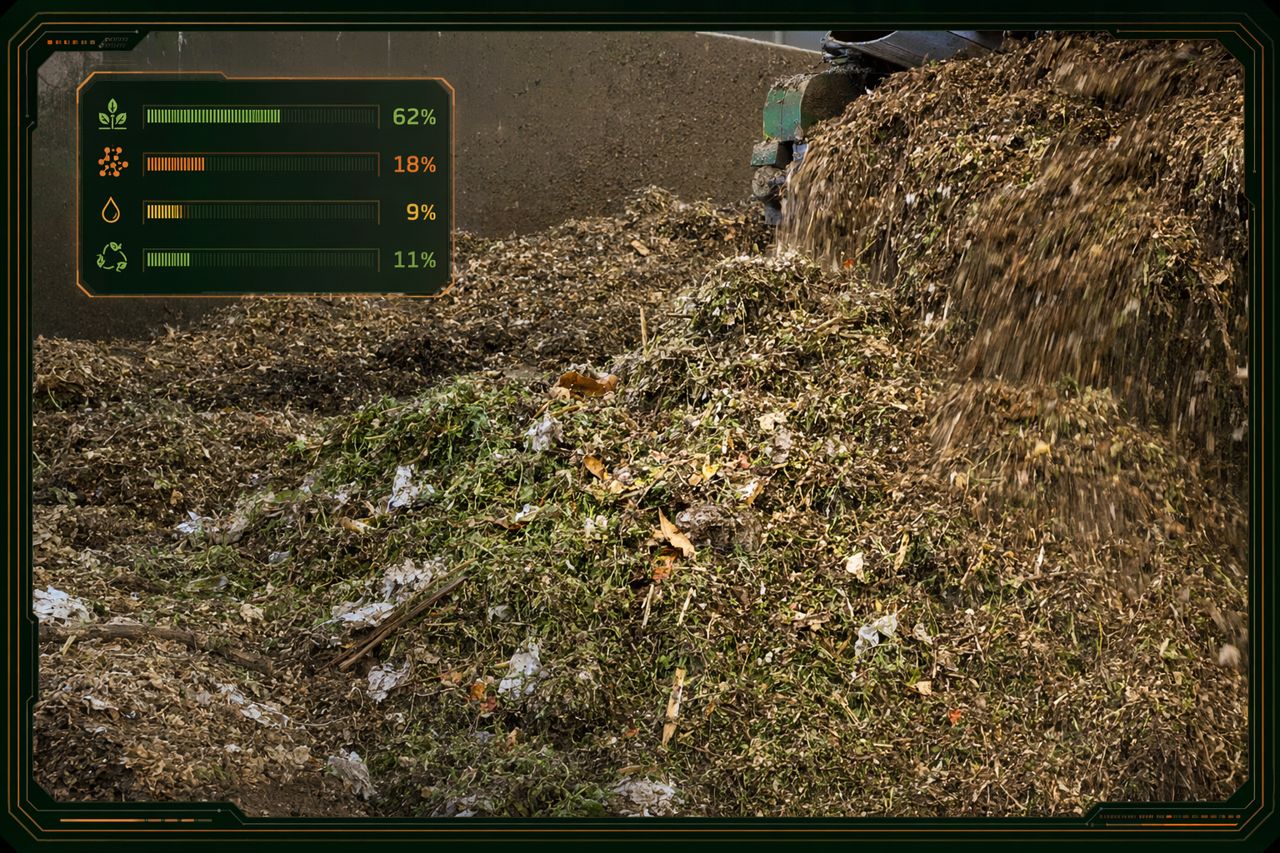
Composting facilities rarely receive perfect material. Loads change by season, generator, weather, contamination level, and pre-processing quality. A program that works on clean yard waste may not be enough when food residuals, wet fiber, grass-heavy material, or greasy organics hit the line.
Enzymefield enzyme blends are selected to support breakdown across the major organic fractions that drive process instability:
The goal is not to replace good compost management. The goal is to give your biology better access to difficult material so the pile, windrow, bay, or vessel runs with more control.
Woody residue is usually treated with fiber-treatment enzyme grades rather than with general "compost enzymes". Alkaline xylanase is one of them: it acts on the xylan in hemicellulose, loosens the fiber structure and helps release what the fiber holds. Grades of this kind are used for the enzymatic treatment of straw, wood, bamboo, herbal material, tobacco and feed, which is the same hemicellulose-rich material that slows a compost pad.
The addition rate is given per tonne of dry fiber, within a wide range; Enzymefield narrows it with you in a trial on your own material. The enzyme can be added per batch or continuously, to suit the process. A typical working window for such a grade is pH 5.0 to 9.5 and 55 to 80 °C, with a 45 to 90 minute reaction time. Those are conditions for a controlled fiber-treatment step, so they do not carry over to an open windrow. Check the stated window and storage terms for each lot before you order; they are quoted per order.
A common composting accelerator combines protease and cellulase with probiotic cultures. The aim of the combined route is a shorter fermentation cycle and less odor than a single additive gives on its own. Whether that holds on your feedstock is a question for a trial, not for a datasheet.
Enzymefield quotes on that basis: a trial quantity first, then bulk supply once the result is confirmed on your material.
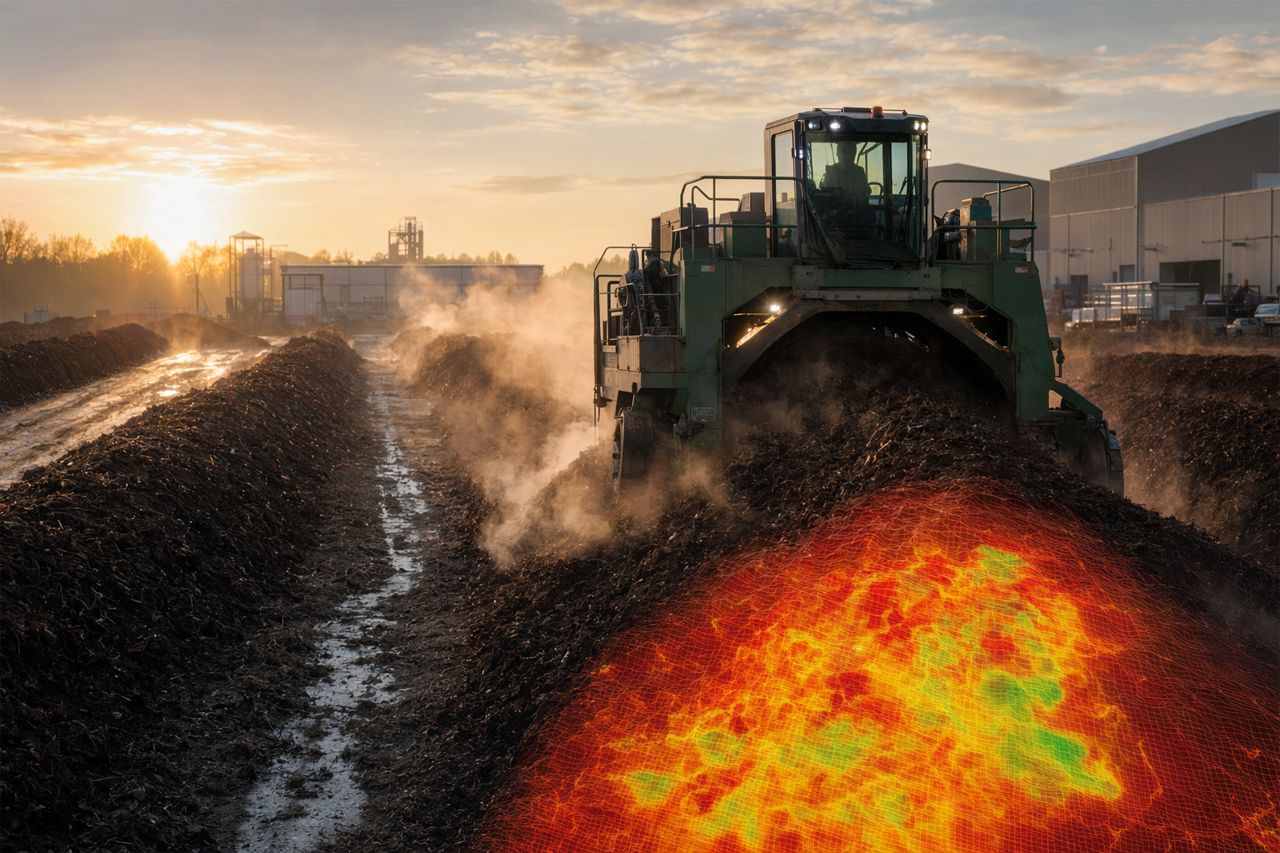
Uneven feedstock breakdown can leave cold zones beside active zones. Enzymefield programs are designed to help make complex organics more available, supporting steadier microbial activity and more predictable heat behavior after mixing and turning.
Woody fiber, wet paper, food residuals, and greasy material can remain intact longer than the surrounding matrix. Enzyme support can help open these fractions earlier in the process, reducing the drag they place on throughput and maturity timelines.
A facility does not control every incoming load. Enzymefield helps build an enzyme program around your actual feedstock profile, so your team has another control lever when seasonal swings, generator changes, or high-moisture organics affect the process.
Odor control depends on recipe, oxygen, moisture, turning, drainage, and site discipline. Enzymes are not a stand-alone odor solution, but they can support a cleaner breakdown pathway by helping difficult organics move through the process instead of sitting in anaerobic or slow-reacting pockets.
Finished compost quality is shaped by the entire process. By supporting more complete breakdown of mixed organics, Enzymefield can help facilities reduce visible residue, improve texture consistency, and support a more reliable path to finished material.
Every composting site has different equipment, labor patterns, and constraints. Enzymefield does not force a one-size-fits-all application model. We help determine where enzyme addition has the best operational fit.
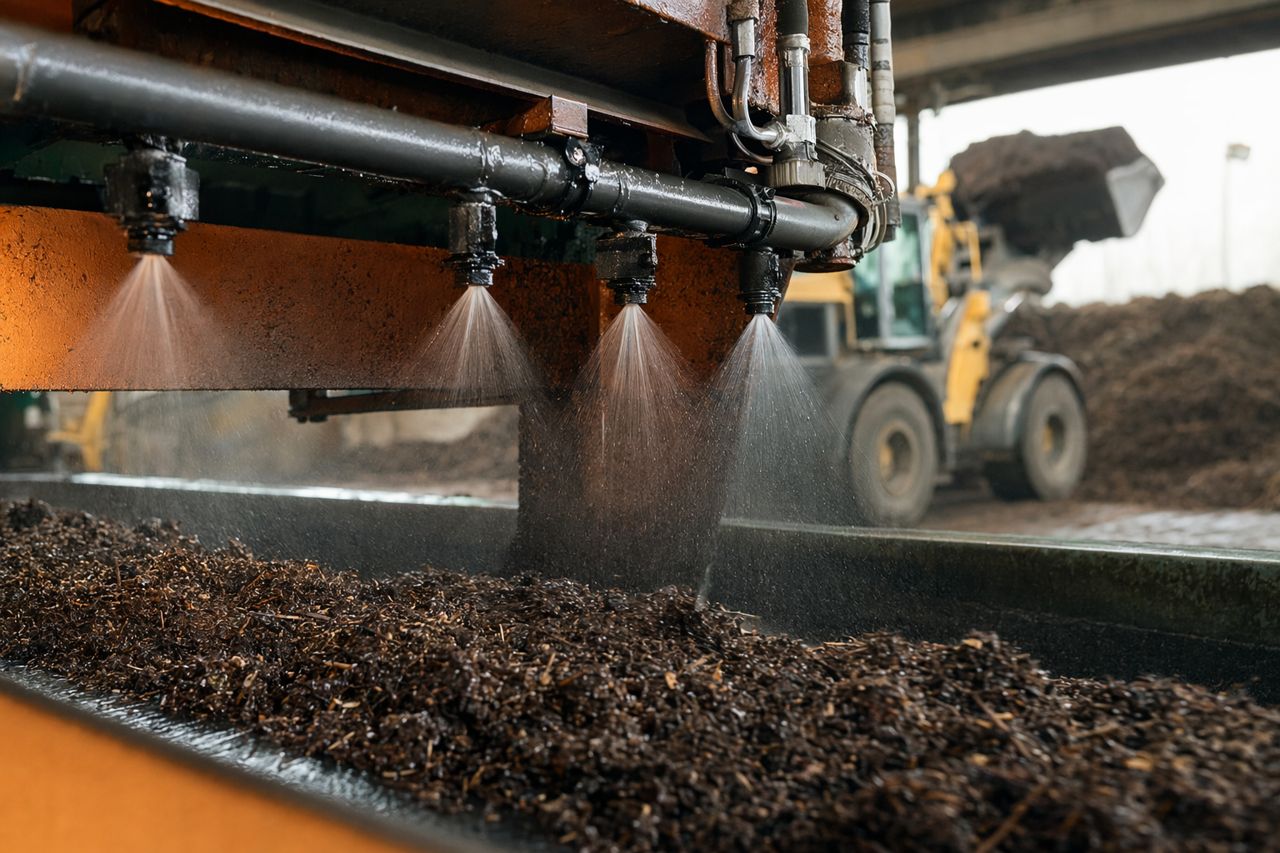
Common integration points include:
The right answer depends on your feedstock, equipment, process window, and site targets.
Enzymefield starts with the material, not a generic product claim. A green waste facility, a food residual processor, and a municipal organics site do not need the same enzyme emphasis.
For woody and plant-heavy streams, Enzymefield focuses on enzyme support for structural fiber breakdown. This can help expose more surface area for the microbial community and reduce persistence of tough material through the process.
For food-heavy material, the blend may need stronger support for proteins, fats, starches, and mixed residues. The objective is controlled breakdown, not runaway instability.
Paper-based organics can hold moisture and create dense pockets. Enzyme support can help loosen fiber-bound material when combined with the right structure, bulking, and aeration practices.
Municipal and commercial organics are inconsistent by nature. Enzymefield helps facilities build a more resilient process aid strategy for changing inbound loads and uneven organic composition.
The essentials are product, quantity and destination. To recommend a practical program, we also ask for:
From there, Enzymefield recommends a blend, an application approach and a trial structure, and quotes the supply.
If you need a compost and organic residue enzyme supplier, Enzymefield can quote the right blend and application point for your site or your customers' sites.
Use the inquiry form below and tell us the product, the quantity and the destination.
Tell us your application and volume — we reply with pricing and lead time.
We have received your message. We will reply by email.