Bulk enzyme supply for compost producers, organic fertilizer plants and distributors handling straw, stalks, husks, leaves and field waste. Quote-only wholesale supply, matched to your residue and process.
Request pricingCrop residue is one of the hardest streams a composting or organic fertilizer operation takes in. Straw mats. Corn stalks stay rigid. Husks shed water. Leaves compact fast. Field waste arrives dusty, woody, sandy, wet, frozen, or mixed with soil, and it holds up throughput when it does not break down on schedule.
Enzymefield is an agricultural residue enzyme supplier for businesses: commercial composters, organic fertilizer manufacturers, farm-waste processors, and the distributors and resellers who supply them. We quote bulk enzyme blends matched to the residue you actually handle and the process you actually run.
Wholesale and bulk supply only. Every order is quoted. Tell us the residue type, the monthly quantity and the delivery destination, and we reply with a supply recommendation and quote. Request a quote
Packaging, pack size and delivery terms are quoted per order.
Crop residues are not uniform. A load of straw behaves differently from chopped stalks, rice hulls, husks, orchard leaves, or mixed field cleanup material.
Enzymefield enzyme solutions are designed to support breakdown of the plant-structure fraction that often slows composting:
The goal is not to replace good composting practice. The goal is to make your existing process more forgiving when feedstock quality shifts.
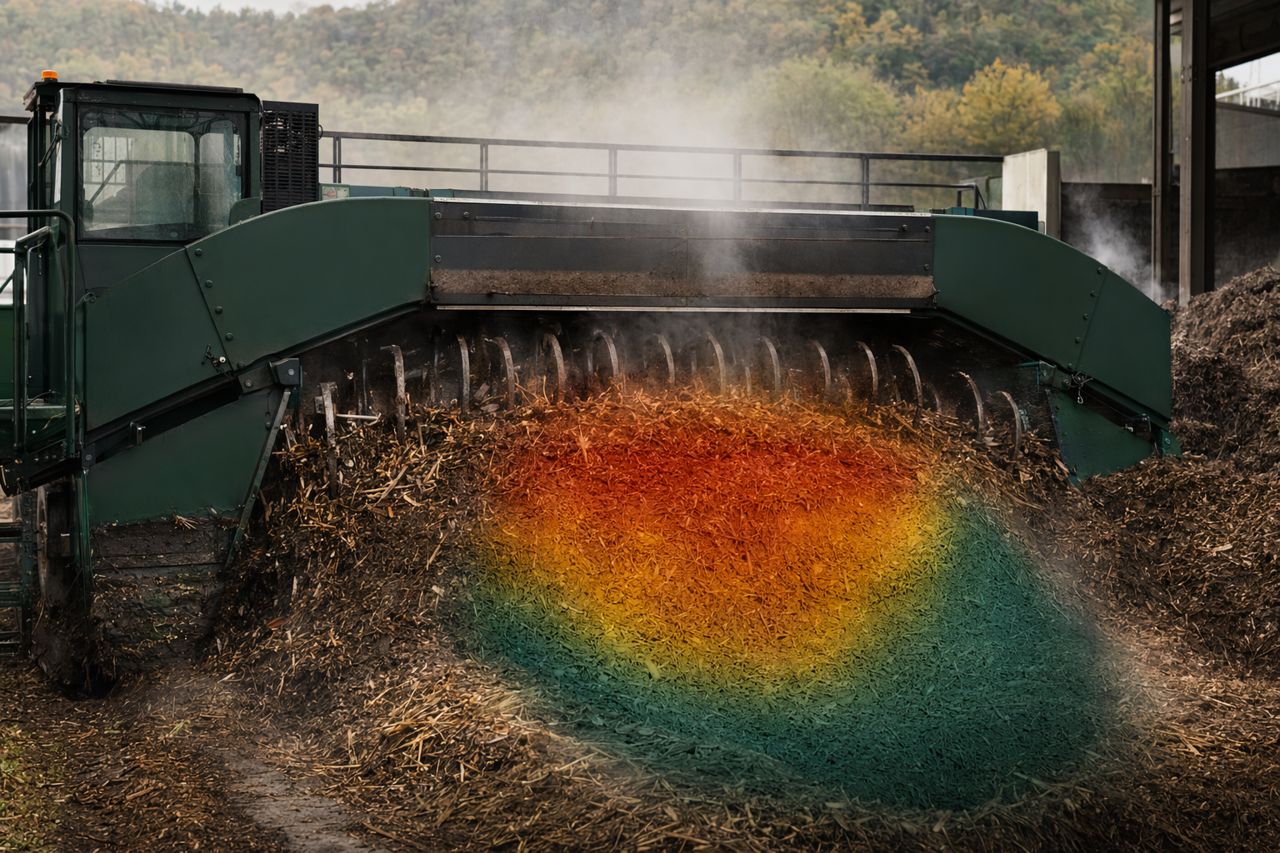
Crop residues resist microbial access because much of the material is locked in fibrous plant structure. When those structures stay intact, piles can heat unevenly, shed water, mat together, or leave visible residue at screening.
Enzymefield crop-residue enzyme blends help condition that material by supporting the early opening of cellulose-rich and hemicellulose-rich surfaces. That gives the composting biology more access to the material already in your windrow, bay, tunnel, or static pile. The same cellulose-splitting action is used elsewhere to release sugars for fuel ethanol, as this page on cellulase for cellulose hydrolysis describes.
Operationally, that can support:
A common buying mistake is choosing a cellulase on its specification and the maker's reputation, then not getting the expected result. The usual cause is a blend that was never matched to the buyer's process conditions. In composting, the cellulase has to cope with ambient temperatures that change from day to day; in other uses, pH and reaction temperature set the choice.
The practical rule follows: pick a blend formulated for the application, run a small trial with a written protocol, and buy in bulk only after the trial solves the problem you bought the enzyme for. Enzymefield quotes trial quantities alongside bulk supply for this reason.
Long, dry straw can trap air in some zones and shed water in others. Enzyme conditioning helps loosen the surface behavior of the residue so moisture and microbes can work more evenly through the pile.
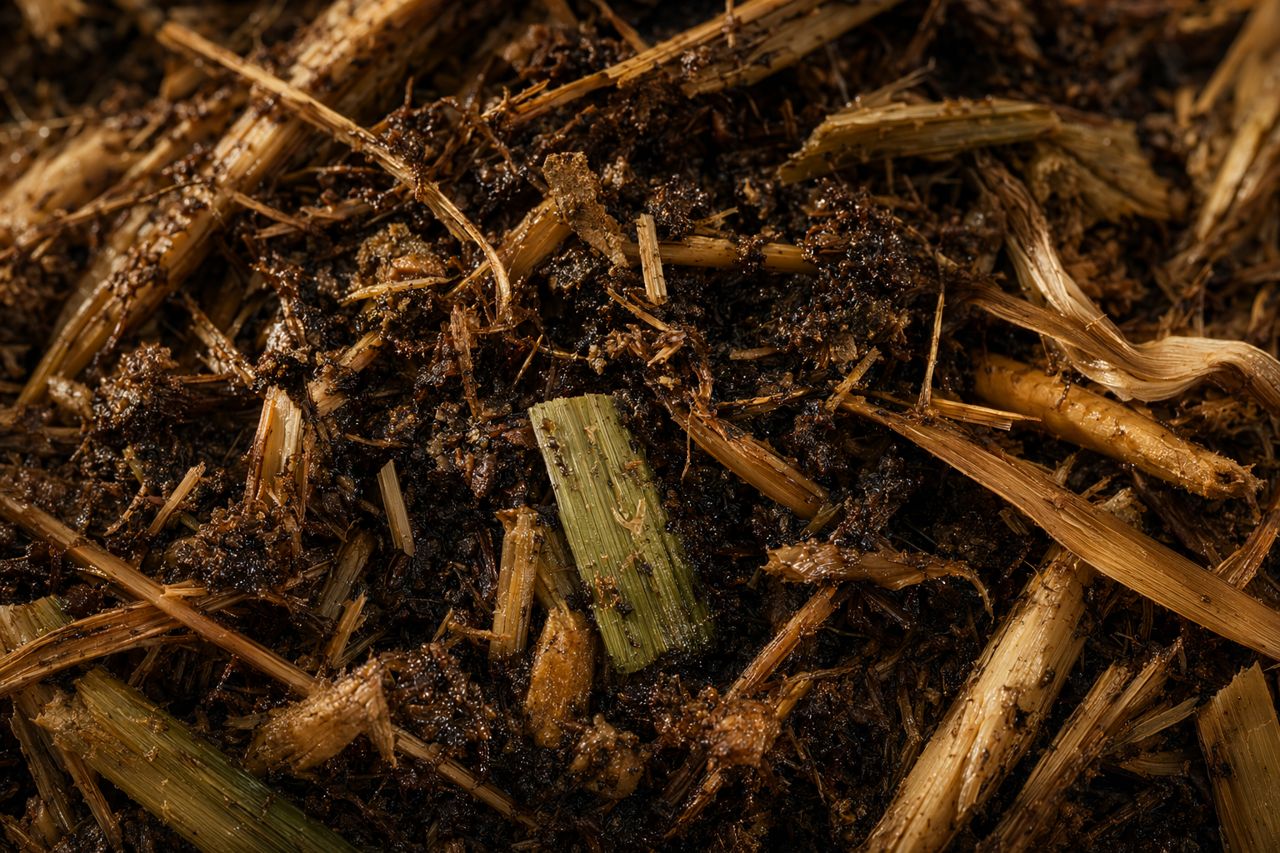
Rigid stalks and cobs can remain recognizable deep into the process. Enzymefield supports earlier fiber access, helping facilities reduce the amount of stubborn residue carried forward into curing or screening.
Husks and hulls can be light, dry, and hard to wet. A targeted enzyme program helps improve surface conditioning so the material participates more fully in composting instead of acting like inert bulk.
Harvest periods can bring sudden volumes of field waste with inconsistent particle size and moisture. Enzymefield helps operators maintain control during those intake spikes by improving biological access to difficult plant material.
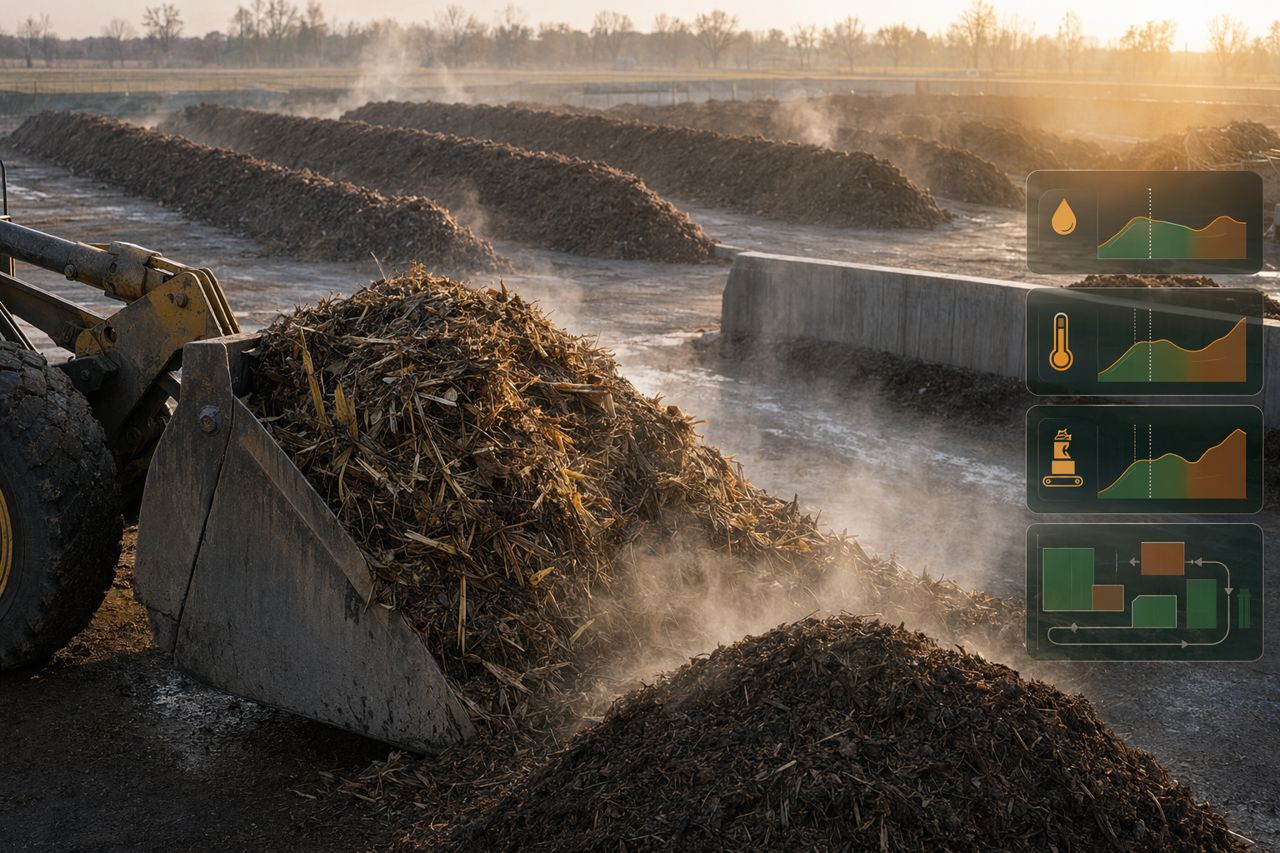
Enzymefield enzyme solutions can be integrated into existing composting workflows without changing the core operating model.
Common application points include:
Our team helps match the enzyme approach to your feedstock, moisture strategy, turning frequency, aeration style, and finished compost target.
Crop-heavy piles can show hot pockets, cold shoulders, or uneven recovery after turning. Enzyme support helps make more material available to the active biology, which can improve thermal consistency across the mass.
Odor issues often come from imbalance: wet pockets, anaerobic zones, overloaded nitrogen, or uneven structure. Enzyme treatment is not an odor mask. It helps the pile process difficult carbon more effectively, supporting better biological balance and reducing avoidable odor pressure.
Stubborn straw, stalk, husk, and leaf fragments can create overs, rework, and customer complaints. Better early decomposition support can help improve finished compost texture and reduce visible crop residue in the final product.
A compost facility rarely gets the same material every day. Enzymefield helps operators stay ahead of variability by conditioning hard-to-process crop residue before it becomes a throughput problem.
Enzymefield crop-residue formulations may include enzyme classes selected to support breakdown of common plant-residue structures, including cellulose-rich, hemicellulose-rich, and pectin-associated fractions.
We do not force a one-size-fits-all product into every site. Your program depends on:
The result is a practical enzyme recommendation aligned with your operating conditions.
Enzymefield supports crop-residue decomposition programs across multiple facility formats:
Whether your site is managing agricultural residue as a primary feedstock or blending it into municipal organics, Enzymefield helps improve the biological access point where crop residue usually slows the process.
A useful quote request covers three things: product, quantity and destination. To recommend the right blend, we also ask for:
If straw, stalks, husks, leaves, or field waste are slowing your process, Enzymefield can quote a bulk enzyme program built around your residue and site conditions, from a trial quantity to regular wholesale supply.
Use the inquiry form below and tell us the product, the quantity and the destination. Enzymefield replies with a facility-focused recommendation and a quote.
Tell us your application and volume — we reply with pricing and lead time.
We have received your message. We will reply by email.